

Cataracts do not strike all at once. They settle in progressively, almost imperceptibly at first. A slight visual discomfort, colors that seem less vivid, blurred outlines. Many patients downplay these early signs, attributing them to fatigue or age. They continue to live, work, and adapt until adaptation is no longer possible. Because cataracts evolve. The lens—the eye’s natural lens—slowly clouds over until it no longer lets light through. Without treatment, the fog becomes darkness. And with darkness, everything changes.
When sight fades, life stops.
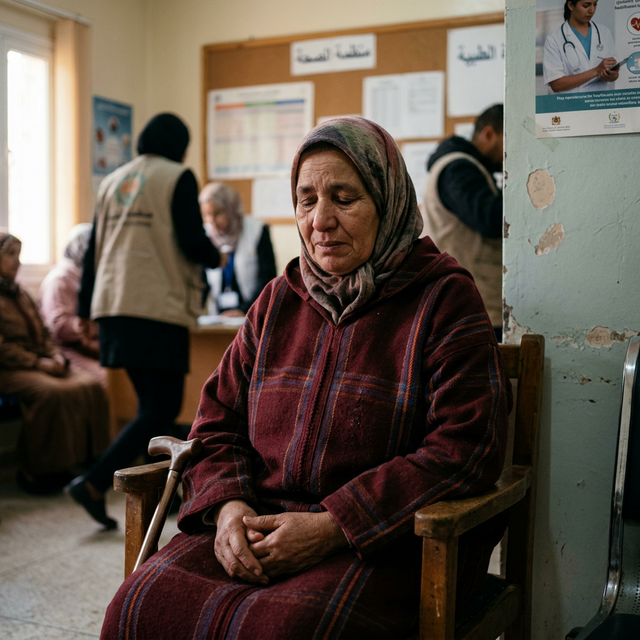
Losing your sight is not just losing the ability to see. It is losing your job, your independence, and your place in society. In Morocco, thousands of people experience this reality every year—not by fate, but due to a lack of access to care.
A silent decline.
When work becomes impossible.
For millions of Moroccans whose livelihood depends on manual or physical labor, vision loss is an immediate economic disaster. A farmer who can no longer distinguish the furrows of his field can no longer cultivate his land. A mason who can no longer see his tools must leave the construction site. A shopkeeper who no longer recognizes his customers or his goods is forced to close shop. An artisan who has spent a lifetime shaping, embroidering, and repairing can no longer practice the trade that sustains them. It is not just an income that disappears—it is an identity. Many of these men and women have built their entire lives around their professional activity. When that activity stops, a whole part of their existence collapses with it.
An ally exists: its name is AL BASSAR
What makes this situation particularly revolting is that cataracts are a perfectly treatable disease. A short, safe, and inexpensive surgical intervention is enough to restore a patient’s sight and, at the same time, their independence and dignity. For populations who cannot afford this care, AL BASSAR organizes free surgical campaigns across the Kingdom. Because no one should lose their job, their independence, and their joy of living for a disease that medicine has known how to treat for decades. An operation is a life resumed. Help AL BASSAR reach those in need.
0%
of blindness is avoidable
0st
cause of blindness in Morocco